Food Blog Website Design: What a Recipe Website Needs in 2026 (With a Real Example)
What makes a food blog or recipe website actually work for readers and Google in 2026: the recipe page layout, mobile speed, structured data, video, and the extras that turn visitors into regulars. Walked through on yamscooking.com, a recipe platform we designed and built.
The Short Answer
A good food blog website gets a hungry person from Google to cooking in under a minute. That means a fast mobile page, the recipe easy to find, exact measurements, numbered steps, the video right there, and the structured data Google needs to show your recipe properly.
Everything else (the design, the stories, the extras) is there to make people remember you and come back.
We'll walk through each part using yamscooking.com, the recipe platform we designed and built for Yams Cooking. We also produce their YouTube channel, so the site was designed around the videos from day one.
1. The Recipe Page Is the Whole Website
Most visitors never see your homepage. They land on one recipe from Google or Pinterest. So design the recipe page first:
- Jump to Recipe button at the top, so nobody has to scroll past a story
- Ingredients with exact measurements, scalable if you can manage it
- Numbered steps, short enough to read with flour on your hands
- Prep time, cook time and servings above the fold
- The recipe video embedded near the method
- A photo of the finished dish good enough to share
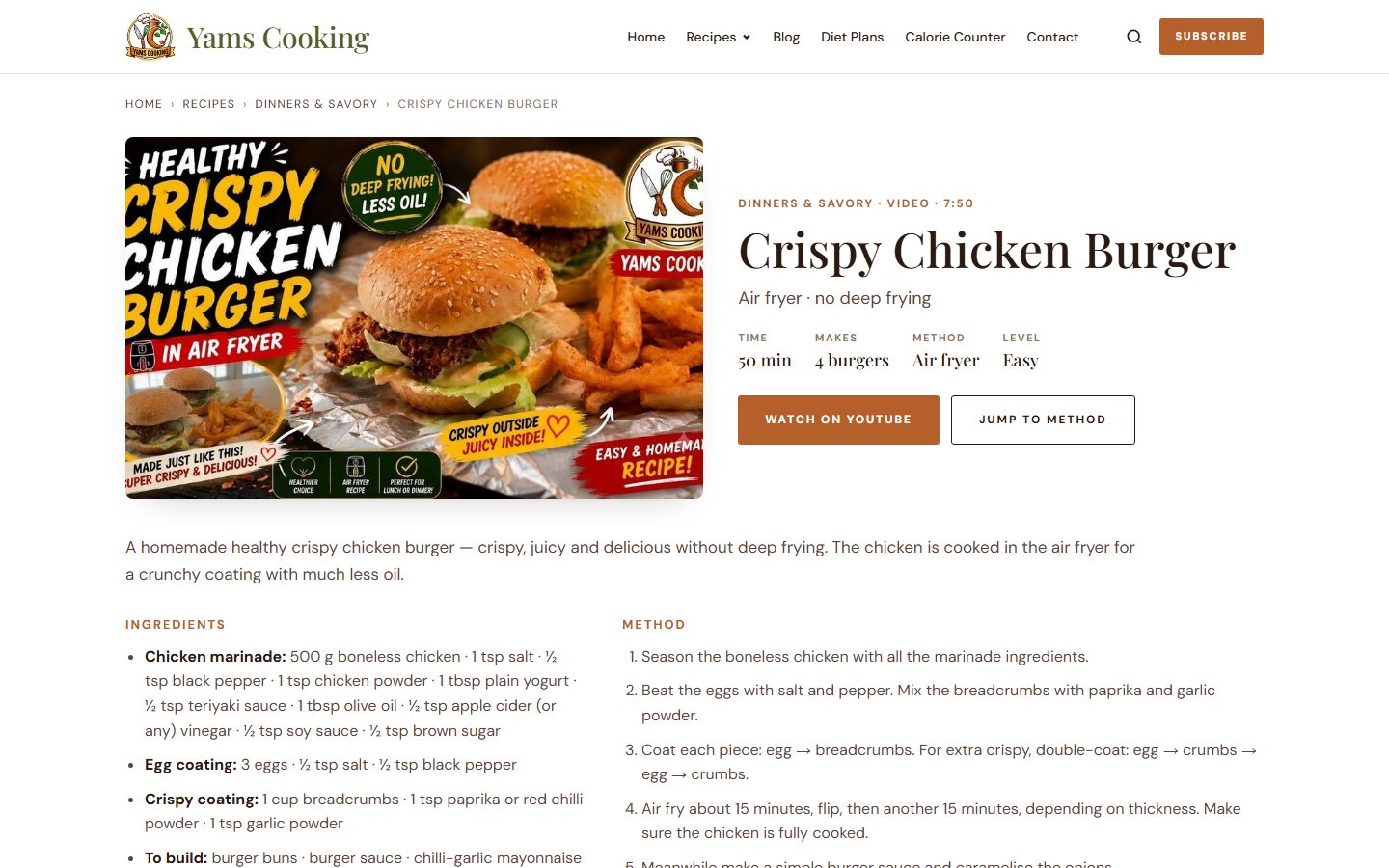
On yamscooking.com every recipe page carries the exact measurements and step-by-step method the video can't, with the video alongside. That's the core of the whole project: the page and the video are one deliverable.
2. Speed and Mobile First
People cook from their phones. A recipe page that jumps around while ads load, or takes five seconds to show the ingredients, loses them.
What to check:
- Ingredients visible within a couple of seconds on mobile data
- Images compressed and lazy-loaded
- No pop-up covering the recipe
- The screen doesn't shift as you scroll
3. Recipe Schema (Structured Data)
Recipe schema is code that tells Google your ingredients, cook time, ratings and video. It's what lets a recipe show up with rich details in search. Every recipe page should have it, and it should match what's actually on the page.
If you use a recipe plugin it's usually built in. On a custom site it has to be added deliberately. Ask your developer to show you it working in Google's Rich Results Test.
4. A Library People Can Browse
A visitor who finds one recipe and likes it should find the next one in a tap:
- Collections by type: dinners, baking, desserts, quick meals
- Search by dish or ingredient
- Related recipes at the end of each one
The Yams Cooking library is organised into collections like Cookies & Bakes and dinners, so a reader who came for brownies can find the cookies next.
5. Extras That Bring People Back
This is where a recipe site can stand out from thousands of others:
- Meal or diet plans built from your own recipes
- A calorie counter or nutrition info per serving
- A newsletter with the week's recipe
- Printable recipe cards
yamscooking.com adds 7-day diet plans and a calorie counter built as an interactive tool, not a static table. They give readers a reason to bookmark the site, not just one recipe.
6. Design That Matches the Food
Your design should make the food look good and then get out of the way. Big photography, a clean layout, and one memorable touch are enough. On the Yams Cooking homepage it's a hero animation where a burger separates into its layers in mid-air and reassembles, which people remember.
Template or Custom Design?
| Template (WordPress theme, Webflow, builder) | Custom design | |
|---|---|---|
| Cost | Low | Higher, quoted per project |
| Time to launch | Days | Weeks |
| Looks unique | Not really | Yes |
| Interactive tools (meal plans, calculators) | Plugins, if they exist | Built for you |
| Speed | Depends on theme and plugins | Built lean |
Start with a template if you're testing whether you enjoy publishing. Go custom once you have a channel or audience, want a brand people recognise, or need tools a plugin can't do.
Food Blog Website Design FAQ
What should a food blog website include?
A searchable recipe library, recipe pages with exact measurements and numbered steps, a jump-to-recipe button, the recipe video embedded, fast mobile loading, recipe structured data, and a way for readers to come back, such as an email list or saved recipes.
Should I use a template or a custom design for my food blog?
A template is fine to start and costs little. A custom design makes sense when you want your brand to stand out, need tools like meal plans or calorie counters, or your template is slowing the site down with features you don't use.
What is recipe schema and does my food blog need it?
Recipe schema is structured data that tells Google a page's ingredients, cook time, ratings and video. It helps your recipe appear with rich details in Google results, so every recipe page should have it.
Why do readers hate food blogs?
Long stories before the recipe, pop-ups and too many ads. Put a jump-to-recipe button at the top, keep ads out of the ingredient list and method, and make the recipe readable on a phone in a kitchen.
How much does a food blog website cost?
From almost nothing on a DIY builder with a template, to a few thousand dollars for a custom-designed recipe site with a library, video and interactive tools. Get a written quote that lists pages, features and running costs.
Want a Recipe Website Like This?
We design and build recipe websites for food creators and food brands, and we can run the YouTube channel and social media behind them too. See the Yams Cooking case study or tell us about your food brand.
Related: YouTube channel management for food creators · Website development cost in the USA · Web design & development
Related resources from Softologics
Explore our SEO services for roofing companies, our digital marketing agency for USA businesses, or browse our free SaaS tools. Ready to grow? Visit our contact page.
SEO & website design for roofing companies
Page 1 rankings and a converting website built for USA roofers.
Digital marketing agency for USA businesses
SEO, content, and conversion strategy for small businesses in the USA.
Professional company profile design
Premium brand profiles that attract high-value clients and investors.
Free SaaS tools — TTS, video converter & more
Text-to-speech, video to audio, and bulk email tools. All free.
Related blog posts
More guides on SEO, digital marketing strategy, and business growth.
YouTube Channel Management for Food Creators: What It Includes and What to Outsource First
A practical guide for cooking channels and food brands: what YouTube channel management actually covers, which jobs eat a food creator's week, what to hand off first, and why a recipe website belongs in the same workflow. With the real setup we run for Yams Cooking.
How Much Does It Cost to Build a Fitness App in 2026? Real Prices for Gyms, Trainers & Coaches
Straight answers for gym owners, personal trainers and online coaches: what a fitness app costs to build in 2026, what drives the price, the running costs nobody mentions, and the cheaper route most agencies won't tell you about.
Content Marketing Statistics 2026: Is Content Still Worth It When AI Answers First? (Data From 192 Marketers)
Straight answers to the questions business owners are asking in 2026: is content marketing still worth it, does AI search kill website traffic, how much should you publish, and what to measure. Built on GoodFirms' survey of 192 marketers, where Softologics was a research partner.